Driving Efficiency: Injection and Blow Molding in Modern Automotive Manufacturing
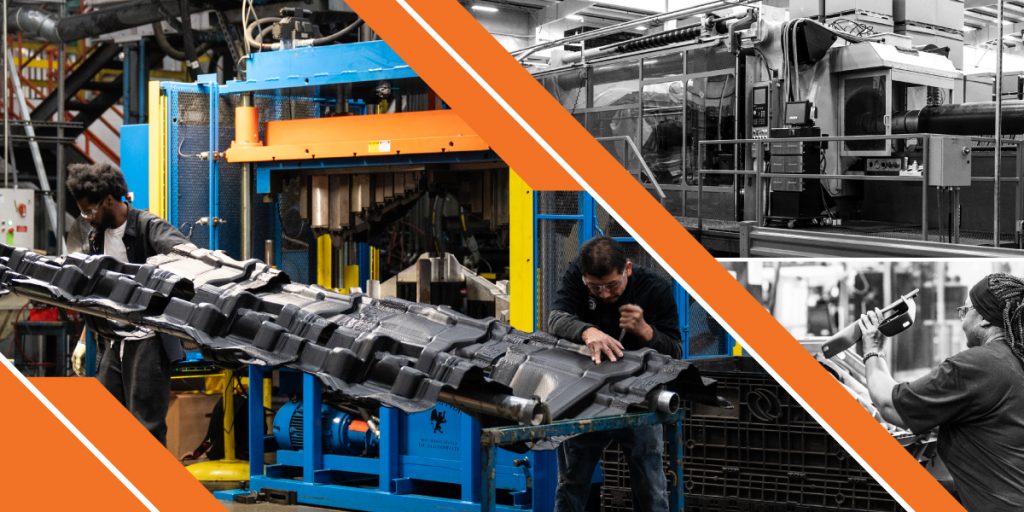
Injection and blow molding have long played an important role in automotive manufacturing, and for good reason. These proven processes support the production of lightweight, durable, and cost-effective components that help OEMs meet the demands of modern vehicle design. As the industry continues to prioritize efficiency, performance, sustainability, and design flexibility, injection and blow molding remain essential manufacturing methods that will continue to evolve alongside the future of mobility.
Precision, efficiency, and material innovation continue to define the trajectory of modern automotive manufacturing. As OEMs pursue lightweighting strategies to help improve fuel efficiency, support electrification, and reduce emissions, injection and blow molding are playing an increasingly strategic role in vehicle design and performance.
At JVIS USA, these processes are more than production methods. They are engineering-driven solutions that enable smarter, lighter, and more integrated component designs, helping us deliver high-quality manufacturing solutions for today’s automotive industry and the road ahead.
Injection Molding and Its Advantages
Injection molding is a highly scalable manufacturing process used to produce complex plastic components with precision and consistency. It involves melting thermoplastic resin pellets and injecting them into molds, where they cool and solidify into final parts.
This technique offers several advantages, including repeatability, material versatility, reduced waste, automation potential, and cost efficiency at high production volumes. It also supports the production of high-quality, lightweight parts that meet automotive industry standards, while allowing for complex part geometries and design flexibility. A wide range of engineered resins, often enhanced with additives such as glass fibers or colorants, allows parts to be tailored for specific structural, thermal, and aesthetic requirements.
Blow Molding and Its Importance in the Automotive Industry
The blow molding process starts by heating a tube of resin, or parison, to a desired length before positioning it between an open mold cavity. The mold is then shut, pinch bars cut and seal the parison, and air is blown into the mold to form the part within the cavity.
JVIS Program Manager Jon Mandziara describes blow molding as a process for manufacturing automotive components using plastics to help make vehicles more lightweight, which in turn supports better fuel efficiency. As the automotive industry continues to focus on sustainability and alternative materials, the use of lightweight, high-strength components is increasingly important and made possible through blow molding. At JVIS, we continue to invest in our blow molding capabilities and maintain a highly skilled team to design and produce products from start to finish. Our customers look to JVIS for expertise and solutions for their blow molded product needs, making it important for our people to remain knowledgeable and trained on the latest technology and advancements in the process.
Injection and Blow Molding Capabilities at JVIS
At JVIS, advanced injection molding capabilities enable the production of complex, high-performance automotive components. Backed by expertise in material selection, vertical integration, and in-house engineering teams, JVIS streamlines production while helping reduce costs for manufacturers. As Mechanical Engineering Manager Swaroop Gurram explains, this commitment to innovation ensures exceptional precision, performance, and overall quality in every part.
These capabilities support a wide range of applications, from interior and exterior components to complex battery trays, while also extending beyond automotive into consumer products like the Paint Behind tool. By continuously evaluating emerging technologies, refining best practices, and incorporating customer input, JVIS delivers solutions that balance innovation, efficiency, and reliability from initial design through final assembly.
Mandziara states that JVIS has a multitude of blow molding presses in various tonnages to support customer needs, along with the appropriate secondary tooling, including deflash dies, punch dies, and assembly equipment, to meet customer requirements.
Specific press size, mold size, and cavity requirements are determined by the design, material, and size of the product. Once those factors are defined, JVIS creates designs for the mold and secondary tooling required to produce the product or part. Products include HVAC ducts, seatbacks, dust shields, and brake cooling ducts.
Expanded Molding and Engineered Plastics Solutions
JVIS has long been a go-to partner for automotive OEMs seeking advanced injection molding solutions, with established manufacturing facilities throughout Michigan and blow molding capabilities in Benton Harbor, Michigan. Most recently, JVIS expanded its reach and strengthened its molding expertise through the acquisition of Toledo Molding & Die, a manufacturer of injection and blow molded thermoplastic components for the global automotive industry.The acquisition extends JVIS manufacturing operations into Ohio through JVIS Ohio and adds five manufacturing and warehouse facilities, further positioning JVIS to support OEM customers with high-quality, high-volume production and expanded molding capabilities.
Read more about the acquisition here: JVIS Acquires TMD to Expand Range, Capacity and Molding Capabilities
JVIS molding capabilities support a broad range of automotive applications, including:
Air management and airflow components
- Interior and exterior molded components
- Lightweight structural solutions
- Under-vehicle and protective components
- Engine compartment components
- Acoustic and noise-reduction solutions
- High-strength plastic brackets and housings
- Engineered resin and glass-filled material applications
- Steel-to-plastic conversion opportunities
- Multi-shot and overmolded solutions
As OEMs continue to seek smarter, lighter, and more efficient component solutions, JVIS remains focused on delivering molding expertise that supports both current vehicle programs and next-generation mobility platforms.
Discover how JVIS can help you develop next-generation components with advanced molding solutions. Start the conversation with us today at jvis.us/contact-us.